
Green Growth Ideology and Eco-Communism
by Workers Party Research Section

This is the first part of a two-part series
Preface
This document hopes to serve as a strategic roadmap for the Workers Party to become a leading voice in Ireland's environmental debate. It moves beyond traditional "green" politics to argue that the survival of the planet is inseparable from the struggle of the working class.
The document challenges mainstream climate solutions through several key perspectives:
The Failure of "Green Growth": It rejects the idea that technology and market-based incentives can solve the crisis, labeling the concept of "decoupling" economic growth from resource consumption a "fantasy".
The Neccessity of Planning: To stay within safe temperature limits, the authors argue we must replace the "anarchy of the market" with a democratically planned economy that produces for human need rather than profit.
Ireland as a Dependent Economy: The text highlights Ireland's role as a "tax haven" and a platform for US multinationals, specifically noting the massive energy drain caused by the growth of data centers.
A Call for Social Revolution: It concludes that because the pursuit of endless growth is hard-wired into capitalism, the required radical emission cuts can only occur through a fundamental change in social relations.
This document aims to provide workers with what the Workers Party believes is a realistic and revolutionary path to environmental stabilisation.
Foreword
In its 2019 Ard Fheis the Workers Party passed a motion urging the Party to become a leading voice in the environmental debate in Ireland . Unfortunately, the Covid pandemic and a dangerous attempt by nationalists and other opportunists to derail the Workers Party put that effort on hold. Now is the time to put the 5 recommendations of that motion into practice.
What follows is an attempt to sketch some of the important issues that communists have to think through in relation to the environmental crises. There are significant gaps in this brief analysis: there is no discussion of the agro-food economy in Ireland, no mention of water, no discussion of specific changes that a warmer world will bring to Ireland, no analysis of ‘degrowth’, and imperialism is only mentioned in passing. These important elements require future analysis.
Environmental crises will deepen, leading to irreversible tipping points unless the capitalist growth and extraction juggernaut is stopped soon. Unless a powerful communist international environmental movement emerges, the unworkable liberal responses to the environmental crises could be swept aside by varieties of eco-fascism with disastrous consequences for natural environment and for the workers of the world. It is hoped that this document will lead to a revival of environmental policy and practice in the Workers Party.

Against the ideology of ‘Green Growth’
Since the beginnings of industrial capitalism 250 years ago, half a trillion tonnes of fossil fuels have been burnt and the resulting CO2 has been deposited in the atmosphere, leading to the current crisis of global heating.[4] If business as usual (i.e., capitalism) continues, in about 35 years another half trillion tonnes will be released, which will push the global temperature to 2 °C, an irreversible level after which the temperature is likely to spin out of control. According to Climate Action Tracker, writing during the Glasgow Cop26 conference, under current policies the estimated end-of-century warming will be 2.7°C. They argue that “we need to see a profound effort in in all sectors, in this decade, to decarbonise the world to be in line with 1.5°C.” [1]
A decade ago, climate change denialism (often funded by fossil fuel manufacturers) had a considerable foothold in the public arena. As this is written in early 2022, that is no longer the case. The scientific case for human-made (anthropogenic) global heating has been made and is overwhelmingly accepted on right and left of the political divide.
And despite this recognition, the global leaders assembled in Glasgow were unable to make the radical changes that will be required to stabilise the global climate and prevent the destruction of natural cycles and habitats. Because it has become clear that continued reliance on fossil-fuels will be disastrous, the ruling class throughout the world, including Ireland, north and south have begun to promote the ideology of capitalist ‘green growth’, which will not bring about the substantive changes that are required, among them keeping fossil fuels in the ground.[2] The Workers Party, along with the Workers and Communist Parties around the world, should be at the forefront of opposition to this ideology.
Although climate change denialism has currently been side-lined, a more persistent form of denialism is found in the widespread belief that, while individuals can do their bit to recycle etc, the juggernaut taking us to catastrophic climate change cannot be stopped. From another perspective, mainstream media, academics, and politicians often present a relatively rosy future in which environmentally friendly technologically advanced capitalism promotes both an expanding economy and a protected environment. Ireland, north and south, is currently witness to ideological onslaught from the media, politicians, and many academics in support of this rosy picture of green capitalism.
It is true that current levels of CO2 in the atmosphere have set in motion processes that will lead to an inevitable increase in global heating for many decades to come. However, the Workers Party rejects the pessimistic notion that catastrophic climate changed cannot be contained. In addition, from our perspective the idea that ‘green growth’ capitalism will mitigate the worst environmental effects is an ideological construct with no empirical basis. A powerful global proletarian movement acting against the motor-force of environmental degradation, i.e., capitalist growth, can put in place the global conditions which can stabilise the environment and bring an end to the other processes that are threatening the world as we know it with extinction. Spanning the globe and equipped with Marxist and Leninist ideology, the Communist and Workers Parties can play a key role in this.
Although the issues surrounding climate science and environmental degradation are complex, from a communist perspective the ideological issue is relatively straightforward. On one side of the debate into how to deal with the environmental crisis are those who believe that capitalism and technology can provide the solutions to the environmental crises. Proponents of what has been named ‘green growth’ argue that due to technological innovation and institutional change, the economy (measured in GDP) can continue to grow while resources consumption decrease, and environmental impacts lessen. This supposed disconnection between a growing economy and the environment is known as ‘decoupling’. Proponents of ‘absolute decoupling’ [3] argue that it will be possible to have a growing capitalist global economy while at the same time fossil-fuel consumption falls dramatically in absolute terms. This is a fantasy, and yet some version of ‘decoupling’ underlies the mainstream responses to the environmental crises that we face.
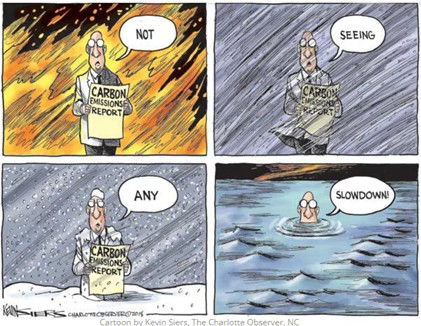
The kind of strategies promoted by governments in Ireland, North and South, and elsewhere are oriented towards producing profit-making technological ‘solutions’ to the challenges of climate crisis, energy sovereignty, and food security. The assumption is that capitalism is capable of an eco- friendly transformation to net zero emissions in which , on the basis of the profit motive and the market, capitalism will bring about sustainability with the help of targeted government intervention and improved institutions. This is presumed to lead to a win–win situation in which investment in the energy sector, public infrastructures and environmental protection can generate additional jobs in environmental industries and, at the same time, create low-carbon infrastructures. As Mark Carney, former Governor of the Bank of England put it, “the transition to net zero is creating the greatest commercial opportunity of our age”[4].
The Eco-Socialist Approach
On the other side of the debate, are those who say that there is no empirical evidence supporting the existence of a decoupling of economic growth from environmental pressures on anywhere near the scale needed to deal with environmental breakdown, and such decoupling appears unlikely to happen in the future. Against the fantasy of decoupled ‘green’ growth, they argue that the capitalist world system is based on the pursuit of endless accumulation of capital reflected by economic growth at exponential rates. Modern economic growth has been based on the massive consumption of fossil fuels, resulting in emissions of greenhouse gases which are threatening human civilization and the natural world with existential risks. The rate of decline in emissions which is required to reduce global heating to tolerable levels is incompatible with the continuing growth of the global economy during the rest of the 21st century. However, as this growth is a necessary condition for the stability of the capitalist world system, the required limits on emissions cannot occur within capitalism.
Technological innovation is necessary, but even with the most optimistic scenarios technologies such as wind and solar power would be insufficient to lessen the rate of emissions that continuous capitalist growth would necessitate. The Workers and Communist Parties must debate the benefits and drawbacks of the nuclear option, and that debate is outside the remit of this document. Other proposed technologies related to carbon capture are untested and potentially extremely dangerous and while mass tree-planting is relatively beneficial as a means of carbon capture, a massive area of land would need to be planted in order to make a dent in global C02 emissions [5]. Biofuels are wasteful and unsustainable and only make sense as profit making schemes [6]. What is required to prevent global heating beyond 1.5°C by the end of the century is a social revolution in which the anarchy of the market is replaced by a planned economy. As more and more people begin to see the truth of this, the international workers and communist parties can play a key role in bringing workers into this revolution.
“To have any hope of preventing major climate catastrophes, the world needs to undertake a massive, coordinated, and planned transformation of the entire economic infrastructure. Moreover, to the extent that technical changes by themselves are quite insufficient to achieve the desired conditions of climate stabilization, the world’s total material consumption needs to be adjusted downwards in accordance with the stabilization requirements. For the downward adjustment to take place without undermining the general population’s basic needs, there must be a radical equalization of the world population’s consumption standards.” Li Minqi [7]
Ireland and the World Environmental Crises
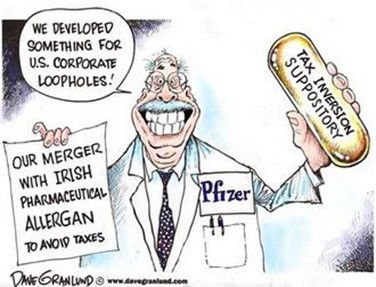
The environmental issues facing Ireland cannot be separated from its economic role in the global imperialist system. As long ago as 1974 Tomás Mac Giolla noted that “imperialism is now the dominant force in Ireland. …the major source of exploitation in Ireland today is American not British imperialism”. [8] Ireland secures export growth through attracting foreign direct investment (FDI). The majority of its exports are produced by foreign owned multinationals (MNCs). Ireland acts as a regional economy for US MNCs to sell directly into the European and international markets. Ireland is a de-facto tax haven [9] and a dependent state, “an FDI-led growth regime”, similar in its dependence to the (formerly socialist) market economies of Central and Eastern Europe [10]. As was seen in the wake of the economic collapse of 2008, Ireland is also bound by the monetary and fiscal mandates of the EU, which prevent it from pursuing an economic policy outside strictly-defined limits.
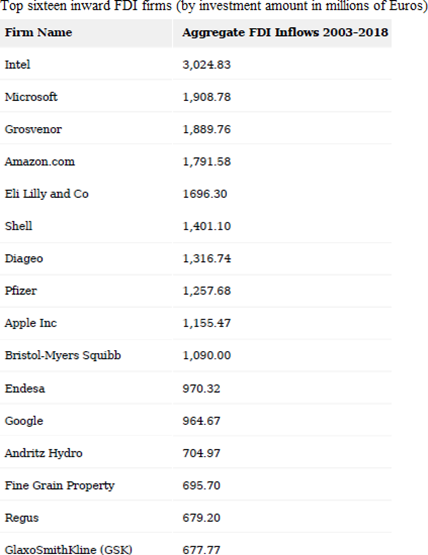
The past two decades have witnessed qualitative change in FDI growth in the Irish state, which affect the environmental issues that exist. The export of electronic goods has been replaced by the export of ICT services, while export levels for chemical and pharmaceutical goods have remained stable.
Between 2004 and 2016, service exports increased from 35 per cent to over 55 per cent of exports . ICT service exports now account for 22 per cent of Irish exports, three times more than in 2000.[10] It should not be forgotten that most of the owners of these exporting firms are massive American multinationals. Of the top twenty-five inward investors, fifteen (65 per cent) are in the ICT or pharmaceutical sectors, while a majority of the others are either energy or real estate property development. [10]
High tech class war
FDI projects are estimated to have led to the creation of 175,000 jobs between 2003 and 2017 while total employment in Ireland grew by 500,000 during the same period. In Dublin city, most of these relatively well-paid tech workers are employed in online sales, marketing, and digital advertising.[10] The growth of this urban middle class is pricing workers in Dublin out of the housing market. In a context of underinvestment in public housing and welfare, this rise in the cost of living will lead to a sharpening of class conflict, which may or may not find an expression in the electoral arena.
Specific environmental issues
(1) Legislation
Pushed by massive climate change protests outside Leinster House in 2019, the Irish state became the first to sell off its investments in fossil fuel companies. In addition, the Petroleum and Other Minerals Development (Amendment) (Climate Emergency Measures) Bill 2019, prohibits future exploration, development, and production activities – effectively a ban on further hydrocarbon extraction. This will minimize the likelihood of future extractive conflicts similar to the Corrib gas campaign.
In addition to the Climate Act, beginning in 2022 five-year carbon budgets will be proposed by the Climate Change Advisory Council for greenhouse gas (GHG) emissions in Irish territory. Departments will have carbon budgets and will have to report annually on their performance compared to defined GHG limits, and outline policy measures to address underperformance. It is unclear what happens if a minister breaches or ignores these targets.
Widespread opposition to potential ‘fracking’ onshore resulted in the introduction of the Petroleum and Other Minerals Development (Prohibition of Onshore Hydraulic Fracturing) Act 2017, which bans onshore hydrocarbon production via hydraulic fracturing.
Unsurprisingly, the oil industry and some state bodies heavily contest the Climate Emergency Measures Bill.
The government aim involves “exiting coal and peat production, increasing the electrification transport and heat sectors, quadrupling our renewable capacity by 2030, and moving to a net zero carbon position by 2050, which implies the removal of fossil fuels unless abated”.
(2) Information and communications technology (ICT)
ICT contributes to environmental problems and exhaustion of resources at every stage from production to use to disposal. Ireland has become a global hub for server farms and data centres, which place a heavy burden on electric grids resulting in massively increased CO2 emissions. In its Climate Action Plan (November 2021) the Irish government makes a commitment “to review its strategy on data centres to ensure that the sector will be in alignment with sectoral emissions ceilings and support renewable energy targets. [62%-81% reduction in emissions by 2030].” However, according to a 2020 report from Eirgrid, ”the long-term demand forecast in Ireland continues to be heavily influenced by the expected growth of large energy users, primarily Data Centres. These need a lot of power and can require the same amount of energy as a large town. EirGrid’s analysis shows that demand from data centres could account for 27% of all demand in Ireland by 2029”. [11] It is unlikely that the government will be able to ensure that data centres will stay within its emissions targets.
(3) Transnational pharmaceutical corporations
In becoming a haven for the processing wings of chemical and pharmaceutical corporations fleeing occupational and environmental regulation in their home countries, Ireland has followed a similar path to other semi-peripheral countries. From the 1970s onwards, most of the giants of the global chemical industry set up shop in Ireland, including SmithKline, Pfizer, Merck, Schering Plough and Roche, which accounted for nearly seventy percent of pharmaceutical industry output worldwide. Since 2014, Ireland has become the world’s seventh largest exporter of medicinal and pharmaceutical products. [12]
Northern Ireland: Private sector led “Green Growth”
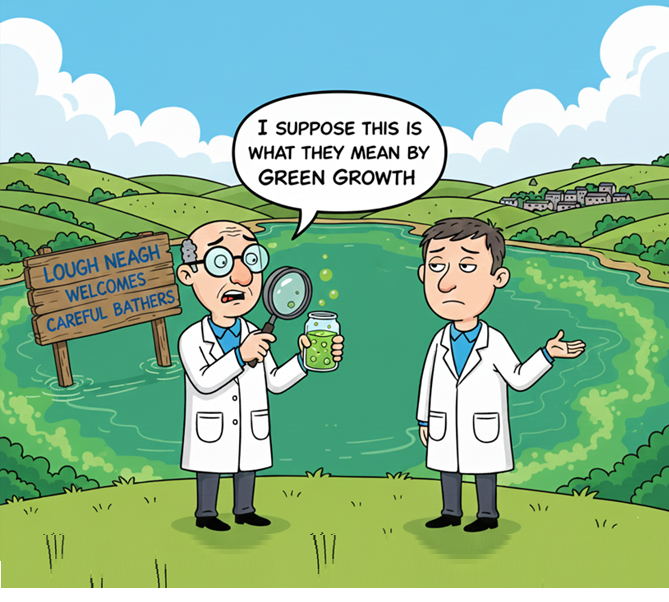
As with the South, the major Northern Ireland political parties are promoting a local version of Green Growth. According to the “Green Growth Strategy for Northern Ireland” (October 2021), delivering change to a green growth society, “will require significant long term investment - by government, by the private sector and by individuals” According to the Green Growth NI scenario “investment rising to around £1.3 billion annually from 2030 will be needed in Northern Ireland to meet our 2050 emissions targets in their ‘Balanced Pathway’ scenario. The majority is expected to come from the private sector.” The strategy paper naïvely states that “large corporations are also committed to real change to drive climate action.”[13] In an indication of what is to come when Sinn Féin gets in to government in the South, Michelle O’Neill said that, “The Green Growth Strategy is seeking to adopt a holistic approach to tackling the climate crisis in the right way by balancing climate action with the environment and the economy in a way that benefits all our people.”[14]
Legislation
The Climate Change (No. 2) Bill as amended is currently (February 2022) passing through Stormont committee stages. The Bill will almost certainly be passed at the legislative stage by the Stormont parties (if the Executive remains in place). According to the amended Bill, the Stormont government will set an overall emissions target of net-zero carbon dioxide (CO2) position by 2050 as part of the overall 82% reduction in GHGs. In addition, changes to target years and percentages can only be amended by to make them more ambitious. A further important amendment will lead to a consultation on the potential options for facilitating a locally-based entity that will provide Climate Change advice and oversight within two years of the Bill coming into law.
In addition, an Onshore Fracking Bill is passing through Stormont, which, if passed, will ban fracking in Northern Ireland. However, this ban does not extend to introducing a ban on offshore petroleum exploration and extraction.
References
[1] https://climateactiontracker.org/documents/997/CAT_2021-11-09_Briefing_Global-Update_Glasgow2030CredibilityGap.pdf
[2] Malte Meinshausen et al, ‘Greenhouse-gas emission targets for limiting global warming to 2 °C’, Nature, Vol 458|30 April 2009 The authors found that only about a third of economically recoverable oil, gas and coal reserves can be burned if global warming of 2 °C is to be avoided by 2100, an amount of fossil fuel that would be burned by 2029 if consumption remains at today's levels.
[3] Robert Pollin, ‘De-Growth vs a Green New Deal’, New left Review 118, July/August 2018
[4] https://financialpost.com/news/fp-street/carney-calls-net-zero-greenhouse-ambition-greatest- commercial-opportunity
[5] Daniel Tanuro, Inegalitarian growth or just degrowth: the IPCC has opened the debate, December 2021 : https://mronline.org/2021/12/28/inegalitarian-growth-or-just-degrowth-the-ipcc-has- opened-the-debate/#edn_5
Tanuro notes: To reconcile GDP growth with respect for the 1.5°C target, some scenarios foresee removing up to 1,000 gigatonnes of carbon from the atmosphere by 2150. Twenty-five times the annual emissions! Tree plantations could only make a very modest contribution (the surface areas are limited) and above all a temporary one (trees absorb CO2 during growth and then emit it-and warming encourages fires).
[6] Okbazghi Yohannes, The Biofuels Deception, Going Hungry on the Green Carbon Diet
Monthly Review Press, New York, 2018
[7] Li Minqi, ‘The End of the “End of History”: The Structural Crisis of Capitalism and the Fate of Humanity’, Science & Society, Vol. 74, No. 3, July 2010, 290–305
[8] Introduction to 1974 edition of ‘The Great Oil and Gas Robbery’ by the Research Department,
Sinn Féin the Workers Party
[9] The following is an example of how MNCs use Ireland to solve possible tax problems: “American biopharmaceutical company Gilead’s hepatitis-C drug Sovaldi, for instance, which is priced at $84,000 in the US and £35,000 in the UK for a twelve-week treatment versus a manufacturing cost as low as $68, has been parked in the corporate tax haven of Ireland. Despite sales of Sovaldi and a related drug, Harvoni, booming in 2015, the company’s tax bill plummeted as it ‘engaged in a massive shift of American profits offshore’, according to research by the advocacy group Americans for Tax Fairness. By the end of 2015 Gilead was sitting on $28.5 billion in accumulated offshore profits.” The Finance Curse, by Nicholas Shaxson, Bodley Head, 2018
[10] Sam Brazys and Aidan Regan, ‘Small States in Global Markets: The Political Economy of FDI-led Growth in Ireland’ in The Oxford Handbook of Irish Politics, Edited by David M. Farrell and Niamh Hardiman, 2021
[11] EirGrid, 2020, All-Island Generation Capacity Statement 2020 - 2029
[12] Sharae Deckard, ‘World-Ecology and Ireland: The Neoliberal Ecological Regime’ Journal of World-Systems Research, Vol 22, No. 1 (2016)
[13] https://www.daera- ni.gov.uk/sites/default/files/consultations/daera/Green%20Growth_Brochure%20V8.pdf
[14] https://www.daera-ni.gov.uk/news/executive-launches-draft-green-growth-strategy-northern- ireland
The next part of this document will be published soon.