
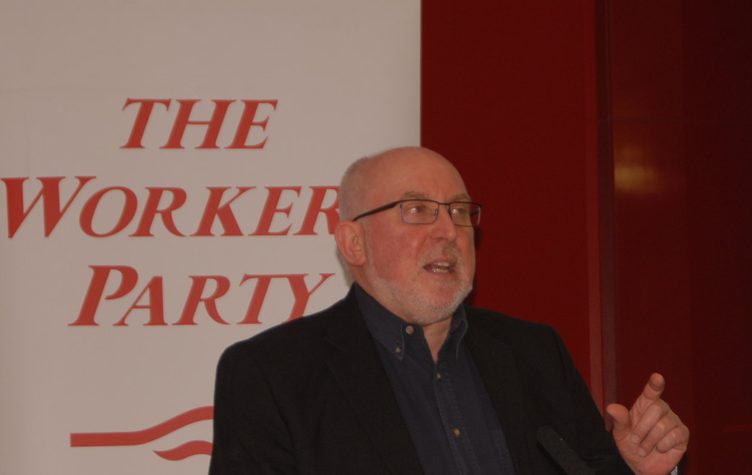
Gerry Grainger, Workers Party Regional Chairperson: Class War, not Culture War!
August 31st 2026
As we approach next year’s Assembly and Local Government elections tribal politics continue to dominate the political narrative in Northern Ireland. The “Drumcree” dispute persists because orange and green nationalism frame the issue as a test of identity.
Unionists present the Garvaghy Road route as a historic and non negotiable entitlement and as a symbolic assertion of dominance which ignores the demographic and political reality and that public space is shared, not inherited.
Nationalists, who frame the march solely in terms of intimidation, deliberately downgrade the emotional and historical significance the route holds for the Orange Order, demanding a total veto over marches, treating Protestant culture as illegitimate and reinforcing unionist fears of cultural erasure. Both sides regard the issue of Drumcree as a test of communal strength where any reasonable compromise is treated as betrayal. Both sides utilise the problem to stoke sectarian tension and engage in divisive, triumphalist rhetoric which underlines the political bankruptcy of both sectarian camps.
Nationalist politicians also use Drumcree to present themselves as protectors of “their community,” while being as content as their unionist counterparts to implement capitalist policies that threaten the interests of the entire working class.
The Drumcree conflict is not fundamentally about a road, a march, or tradition. It is about two rival bourgeois political blocs, unionist and nationalist, mobilising sectarian identity to maintain their power over a divided working class. Both sides defend “their community” while leaving the working class trapped in poverty, inequality, exploitation and political stagnation.
Sectarian triumphalism, from whatever quarter, undermines class unity, selling the false and dangerous narrative that Protestants and Catholics have opposing interests. The entire debate is framed in terms of identity politics, where historical memory is weaponised, tribalism deepened and flags and emblems are used to distract workers from the real enemy, capitalist exploitation. The solution demands a total rejection of sectarian politics, mutual respect for cultural expression and a united working class committed to a socialist alternative.
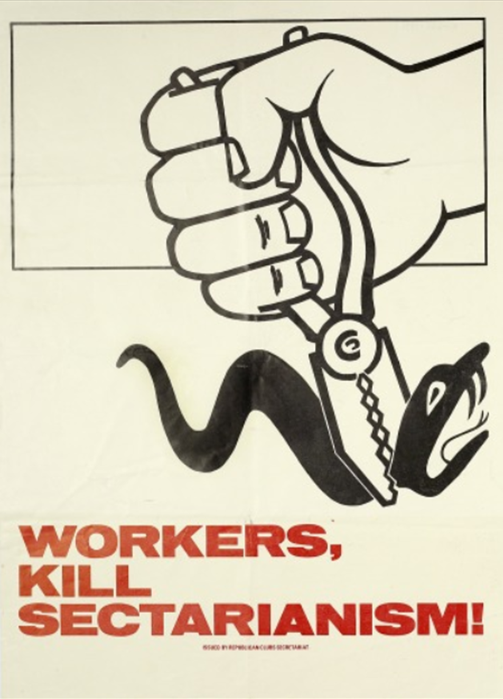
The Workers Party explicitly rejects the notion of “two communities” and “bourgeois nationalism,” which binds workers to their oppressors through “identity”. The real struggle is against low wages, precarious employment, critical underinvestment in health, education and social infrastructure manifest in the capitalist system.
The political representatives of the unionist and nationalist bourgeoisie mobilise identity to maintain their power, while the working class remains divided.
The resolution of Drumcree lies not in compromise between sectarian blocs but in the emergence of a united working class movement capable of transcending sectarianism; eliminating identity politics and instead asserting class politics; presenting a revolutionary programme for political and social transformation and creating the conditions for the abolition of the capitalist system and the creation of a socialist society.