President Díaz-Canel attends the opening of the International Meeting of Communist and Workers' Parties
From Granma Newspaper Author: Wennys Díaz Ballaga | internet@granma.cu August 7, 2026. Original in Spanish
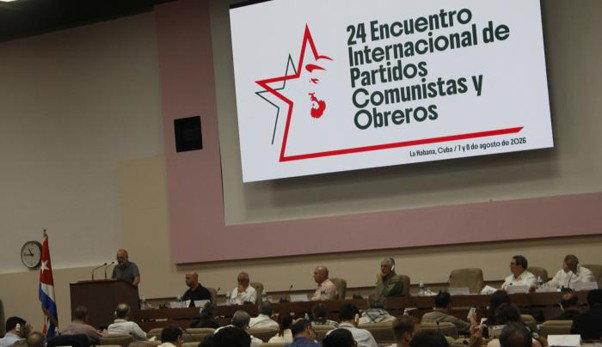
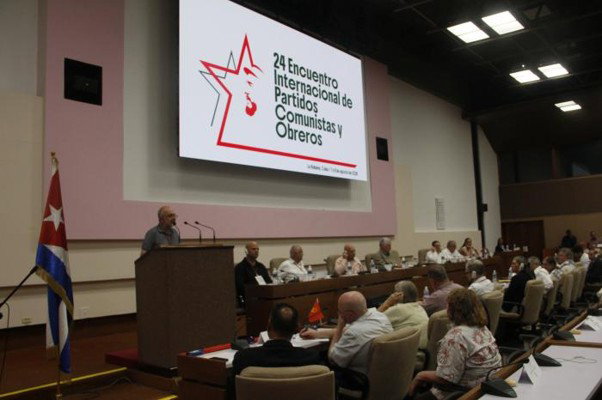
The 24th International Meeting of Communist and Workers' Parties (IMCWP), which brings together representatives of dozens of political organisations from all continents, began this Friday in Havana.
The opening of the event, held at the Convention Palace, is attended by the First Secretary of the Central Committee of the Communist Party of Cuba and President of the Republic, Miguel Díaz-Canel Bermúdez, and is celebrated within the framework of the centenary of the birth of the Commander-in-Chief of the Cuban Revolution, Fidel Castro, a central figure in the history of the international communist movement.
Under the slogan "We defend and pay tribute to the legacy of the Cuban Revolution on Fidel's centenary, we deepen our solidarity with socialist Cuba, we strengthen our common actions and we join forces for peace and against imperialist aggression," the IMCWP stands as a forum for political coordination and ideological debate.
Founded in 1998 in Athens, Greece, this organisation is considered the most comprehensive and oldest of its kind, currently made up of 118 parties.
Its celebration in Havana, besides being a gesture of solidarity with the Cuban people in the face of the intensification of the US blockade, represents an important step to join forces and draw up common strategies in the face of the challenges of capitalism and the imperialist offensive.
The meeting's agenda includes intense days of debate and the coordination of initiatives to strengthen unity and solidarity among the world's left-wing forces.
The meeting in Havana is not only a tribute to Fidel Castro's legacy, but also a platform to reaffirm the commitment to peace and denounce imperialist aggression, thus consolidating Cuba's role as a symbol of resistance and a meeting point for the global left
SOLIDARITY AND UNITY IN THE FACE OF CURRENT CHALLENGES
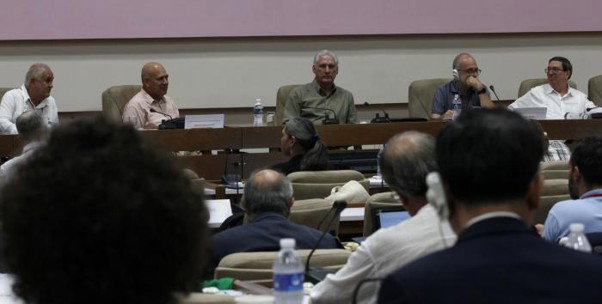
Speaking at the opening of the XXIV International Meeting of Communist and Workers' Parties, Dr. Roberto Morales Ojeda, member of the Political Bureau and Secretary of Organisation of the Central Committee of the Communist Party of Cuba, highlighted the importance of the presence on the Island of more than one hundred representatives of 48 political parties, in a context marked by the challenges facing the country.
Morales Ojeda thanked the participating delegations and stated that their presence constitutes an expression of solidarity with Cuba.
He noted that the meeting is taking place under complex circumstances for the nation, which is subject to an economic, commercial and financial blockade that, he explained, limits access to fuel, medicine, food, spare parts, investments, credit and other resources necessary for the country's development.
The party leader emphasised the impact of these restrictions on sensitive sectors of society, including health services, where —he asserted— shortages of supplies, medicines and resources affect patient care and hinder the work of the health system.
He also rejected the extraterritorial coercive measures applied against Cuba and the actions that, in his opinion, seek to affect the national economy and generate a scenario of greater pressure on the country.
Against this backdrop, he emphasised Cuba's commitment to advancing the modernisation of its economic and social model. He noted that, following a process of dialogue with various sectors and an analysis of international experiences, 176 economic and social reforms were approved, grouped into 23 thematic areas.
These measures, he explained, are intended to "unleash productive forces to generate wealth and distribute it with social justice, improve the living conditions of the people, boost the socio-economic development of the country and preserve the social achievements of the Cuban Revolution."
Morales Ojeda stated that the ongoing transformations aim to diversify the economy, combat inflation, generate new sources of employment, strengthen wages, increase exports, and reduce external dependence through greater utilisation of national capabilities.
During his speech, he also highlighted the significance of the meeting because it took place within the framework of the celebrations for the centenary of the birth of the historical leader of the Cuban Revolution, Fidel Castro Ruz, whose anti-imperialist, humanist and peace-promoting thought, he said, remains fully relevant.
"Their firmness in defending the sovereignty of the homeland, their condemnation of the fierce imperial appetites, and their call for unity among left-wing and progressive forces are essential to counter the challenges of the current international scenario," he stated.
The Secretary of Organisation of the Central Committee of the Communist Party of Cuba called for strengthening unity and cooperation among the participating political organisations and promoting debate on contemporary challenges, in defence of peace, the sovereignty of peoples and the search for alternatives in the face of a world marked by profound inequalities.
Foreign Minister Bruno Rodríguez Parrilla stated that the current international scenario is marked by the weakening of international law, disrespect for the sovereignty of states, and the advancement of practices that, he said, seek to impose hegemony through force, military aggression, and interference in the internal affairs of other countries.
During his speech at the XXIV International Meeting of Communist and Workers' Parties, the chancellor denounced the resurgence of positions he described as neo-McCarthyist in the United States and rejected a recent State Department report, which he called "superficial, mendacious and inconsistent".
Rodríguez Parrilla questioned the accusations contained in that document against Cuba and argued that its purpose is to "criminalise genuine expressions of solidarity with Cuba" and discredit causes linked to social justice, civil rights, the fight against racism and the defence of peace.
The minister asserted that the United States' policy against the island continues to cause severe economic and social damage, while warning of the tightening of measures aimed at restricting the country's access to fuels, technologies, and supplies essential for electricity generation and other strategic sectors.
In that context, he reiterated that Cuba maintains its willingness to engage in bilateral dialogue "on the basis of respect," although he specified that it will not negotiate matters related to its constitutional order, national sovereignty, or the principles of the Revolution.
"We will never discuss the internal affairs of the Republic of Cuba or the principles of the Cuban Revolution with the United States government," he stated.
The foreign minister also highlighted the international support the island receives and recalled the broad support expressed at the United Nations against the economic, commercial and financial blockade imposed by the United States.
He urged the strengthening of international solidarity and cooperation among progressive forces, while stressing the importance of developing our own capacities in the digital sphere to combat disinformation and defend, from the Global South, communication sovereignty and the right of peoples to build their own development projects.
As part of the meeting sessions, the conference "The 176 Economic and Social Transformations in Cuba" was also presented by Jorge Luis Broche Lorenzo, member of the Secretariat of the Central Committee and head of its Economic-Productive Department.
The presentation aimed to contextualise the scope of the approved reforms and address some of the main questions that, as explained, have arisen since their announcement. These included whether the measures constitute an improvisation, a concession to external pressures, or a systemic shift toward capitalism.
The central thesis presented was that the 176 transformations respond to a continuity in the principles, objectives and strategic directions of the Revolution, while introducing changes in the instruments, powers, management mechanisms and the pace of implementation to face the economic and social challenges that the country is experiencing.
According to the presentation, the measures seek to update economic management without abandoning the socialist project, with an emphasis on increasing production, strengthening state-owned enterprises, developing new economic actors, and preserving social justice.
THE COMMUNIST PARTY OF TURKEY CALLS FOR SOCIALISM TO BE PRESENTED AS AN ALTERNATIVE TO CAPITALISM.
Kemal Okuyan, the general secretary of the Communist Party of Turkey, stated that armed conflicts, mass migrations, the deterioration of workers' rights, and the reduction of spaces for political participation are consequences of the structural crisis of capitalism.
During his speech at the XXIV International Meeting of Communist and Workers' Parties, he expressed his solidarity with Cuba and considered that the difficulties faced by the Island, as well as the measures adopted to respond to them, are part of the consequences derived from the capitalist system and the pressures it exerts.
Okuyan warned that the international situation will continue to worsen as long as this economic model remains in place and argued that "there is no reason to believe that capitalism will enter a more stable, orderly, or peaceful stage."
The communist leader also warned of rising geopolitical tensions, noting that Turkey has become increasingly involved in regional conflicts and military alliances. This, he asserted, poses new challenges for progressive forces.
Faced with this scenario, he defended the need to reposition socialism as a political alternative for the people. "I'm not talking about a specific policy or a group of countries at the top of the imperialist system. I'm talking about a social system that we have no other option but to overcome," he stated.