On the sectarian murders of 4 and 5 January 1976
Fifty years ago, on 4th and 5th January 1976, sectarian murder was unleashed on County Armagh.
On 4th January 1976, a number of innocent civilians were attacked and killed by sectarian murderers: three members of the Reavey family in Whitecross in south Armagh when at least three gunmen entered their home where they were watching television and opened fire on the family with machine guns and pistols. Brothers John and Brian died at the scene and Anthony died less than a month later.
At about the same time gunmen entered the O’Dowd home in Ballydougan where sixteen people were in the house for a family reunion. The gunmen sprayed the room with bullets, killing Joseph O'Dowd and his nephews, Barry and Declan O'Dowd. Barney O'Dowd (Barry and Declan's father) was also wounded by gunfire. The Reavey and O’Dowd families were Catholic.
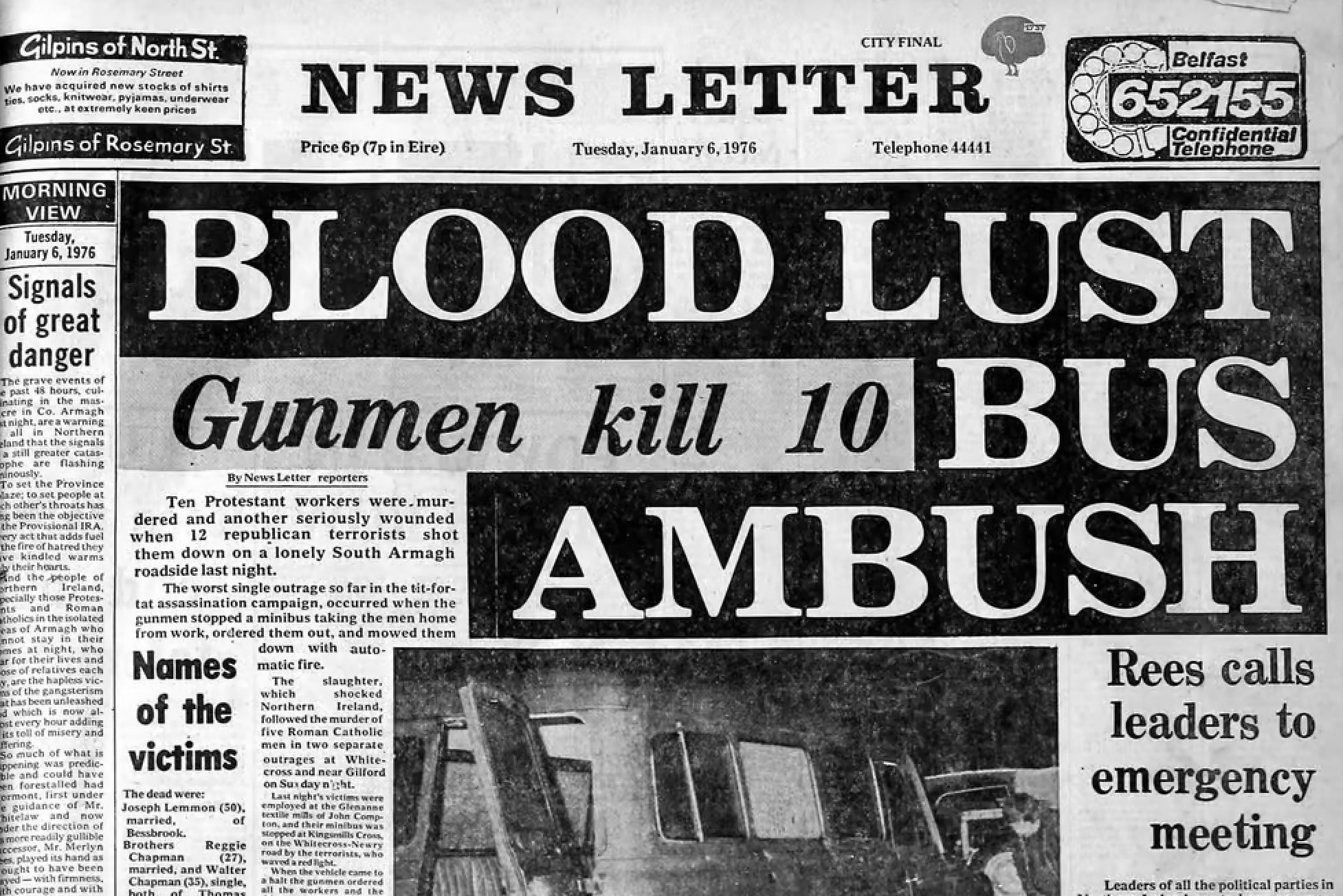
On 5th January 1976, an armed gang stopped a minibus carrying eleven workers, near the village of Whitecross. These workers were lined up beside their bus and shot. All those murdered in this sectarian massacre were of the Protestant religion. Only one victim survived, despite having been shot 18 times. One man on the minibus who was of the Catholic religion was allowed to go free. This act of mass murder which became known as the Kingsmill massacre was carried out by a Catholic nationalist group. It was the climax of a series of tit-for-tat killings at the time. A 2011 report found that this sectarian attack was carried out by members of the Provisional IRA and that these workers were targeted because they were Protestants.
These incidents were but two examples of a catalogue of murderous sectarian attacks, including mass killings, carried out over decades in Northern Ireland. These attacks took place at a time when workers, regardless of religion, suffered the privations of high levels of unemployment and poverty. Despite attempts by the trade union movement to prevent the descent into sectarian chaos and division, pro-Irish and pro-British nationalism, both in their paramilitary and political forms, served to foster and strengthen division among the working-class which already bore the heavy burden of capitalist exploitation and oppression and the brunt of the sectarian violence.
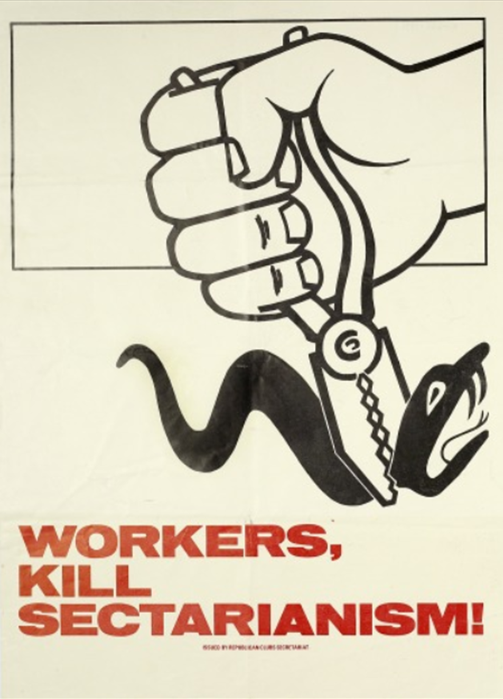
The task of uniting workers in the maelstrom of sectarian and communal violence and unrest was urgent and immense. The Workers Party worked with the trade union movement, the student movement and others to unite workers around common campaigns in the service of their class interests and an end to the violence of the state and the paramilitary organisations. Two Party slogans at the time were “Sectarianism Kills Workers” and the demand for “Peace, Work and Class Politics”.
Despite a reduction, but not the elimination, of sectarian violence, the opposing forces of nationalism in Northern Ireland continue to wage war by other means, ramping up sectarian rhetoric, increasing communal tension, utilising divisive and provocative flags and emblems, whipping up hysteria around sectarian issues and consolidating and institutionalising sectarianism in housing, education and government, to divide workers and to distract them from their class interests.
These were acts of sectarian savagery on working people carried out by sectarian murderers under flags of convenience. The attacks on the Reavey and O’Dowd families were carried out by the Ulster Volunteer Force and the Kingsmill attack by the provisional IRA.
The Workers Party remembers those people brutally murdered and their grieving friends and families in that cold and callous few days in January 1976.
Sadly, the vile brutality of sectarianism took many lives in our troubled past. We affirm our commitment to a new and better future.
Workers Kill Sectarianism!