
Fish Kills, Dairy Farms & Capitalism
Why are so many fish dying in our rivers?
Justin O'Hagan, 18th August 2026
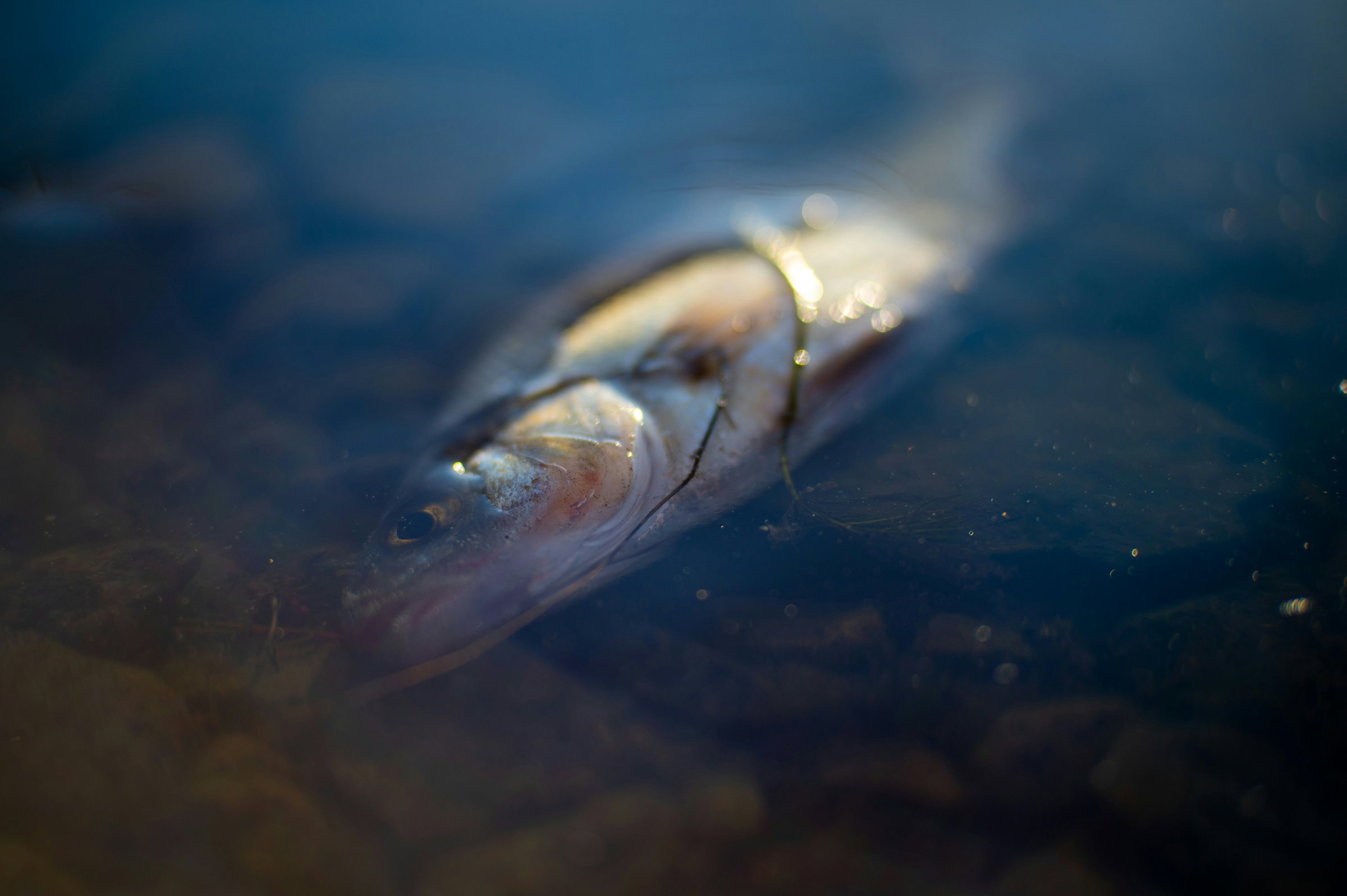
Fish kills in Ireland’s rivers are coming thick and fast. The latest reported event occurred on 5th and 6th of August on a 2km stretch of the Boycetown River, a tributary of the Boyne River near Trim, county Meath. According to Inland Fisheries Ireland (IFI) around 900 brown trout and a small number of sticklebacks died. On 2nd August more than 500 fish died on the river Tolka in Co Dublin in what IIFI describes as a “significant” kill. This follows reports that in July 7,500 fish were killed in the Cavan and more than 500 fish died on the river Rye near Maynooth. The most serious fish kill (so far) in 2026 occurred in June, when more than 20,000 fish were killed by agricultural pollution on the river Glyde, county Louth.
Also in June, the IFI announced a new integrated protocol for managing significant kill events. IFI chief executive Dr Eamonn Kelly said that the protocol “provides a practical and collaborative framework to ensure all relevant State authorities are better prepared to collectively respond to any future incidents.” Meanwhile, the IFI has prepared a file for the DPP which could lead to the prosecution of those responsible for the Glyde kill.
The Environmental Protection Agency (EPA) has repeatedly highlighted the deteriorating state of Irish water quality. Recent assessments show that around half of Ireland’s rivers and two-thirds of its estuaries are polluted. Agricultural nitrogen from slurry, manure and chemical fertilisers remains one of the principal causes of this decline. The Irish public overwhelmingly support clean healthy waterways.
AGRICULTURAL POLLUTION AND MARKET EXPANSION
Nitrate pollution is behind much of the agricultural poisoning of our waterways and the excessive use of nitrate fertilisers by Ireland’s dairy industry leads to their appearance as run-off in Ireland’s rivers and estuaries.
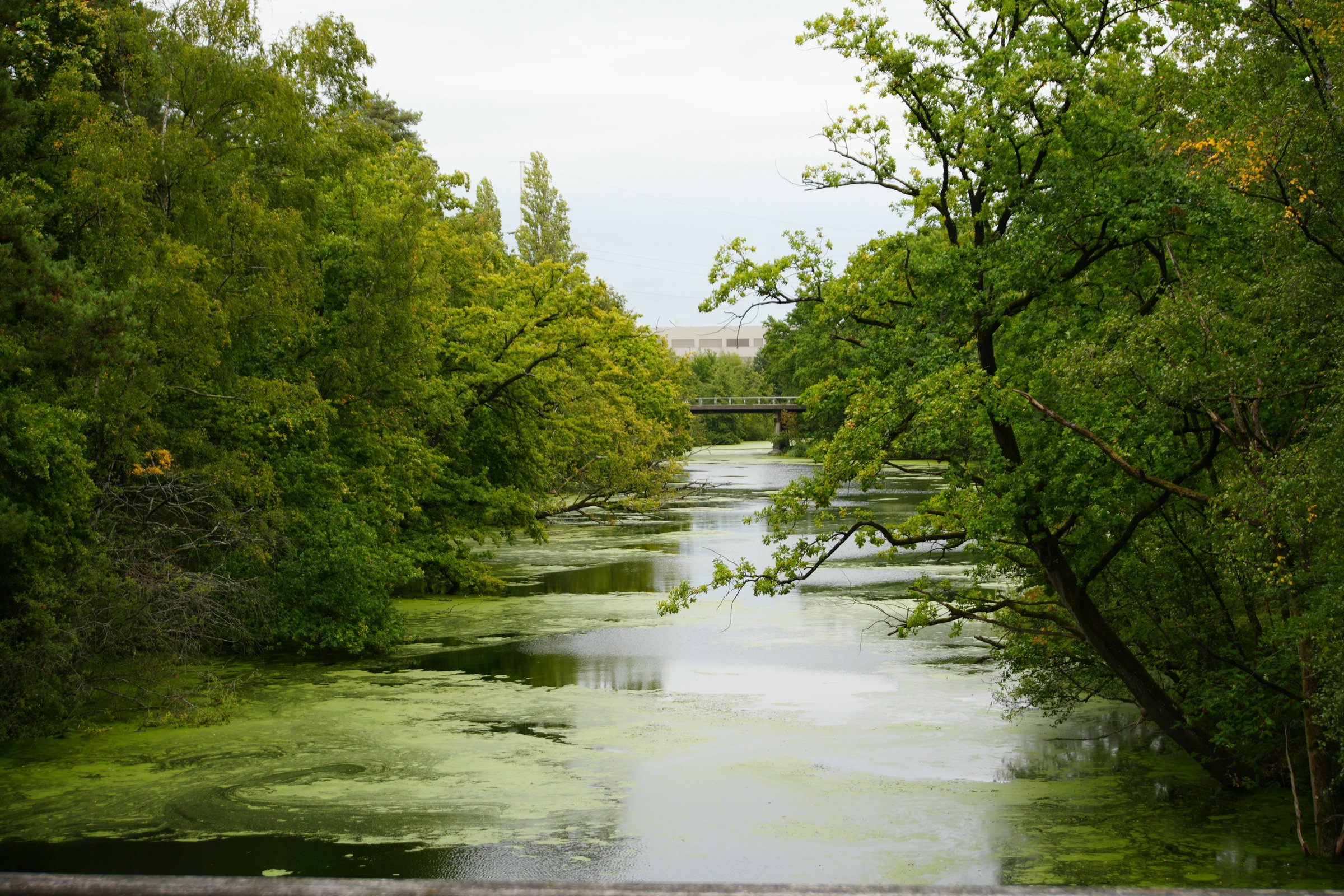
The pollution of a water body with excessive nutrients, i.e., phosphates and nitrates can lead to the overgrowth of algae that outcompete and displace other plants and animals in a process known as eutrophication. The algal blooms are not responsible for fish kills. It is when these blooms die and decompose that oxygen levels collapse, often leading to mass fish mortalities. At their worst, these algal blooms can result in deoxygenated ‘dead zones’, of which there are hundreds around the world, often in coastal areas and estuaries.
A recent Report by Ireland’s Environmental Protection Agency (EPA) found that 52% of Ireland’s rivers have unsatisfactory, ‘moderate’, ‘poor’ or ‘bad’ ecological status, and that “nitrate concentrations are too high at 44% of rivers sites”, predominantly in the east, southeast, and south of the country, largely overlapping with areas of intensive agriculture and large urban centres. The report states that the “the very best rivers…continue to deteriorate, and their condition has dropped significantly over the past decade.”
DAIRY QUOTAS REMOVED
Pollution and fish-kills in Ireland’s rivers are tied up with EU and Irish government policy decisions. In 2015 the European Union removed dairy quotas which had been put in place in 1984 to regulate milk production in member states. The removal of the quota boosted the export of EU dairy products to non-EU countries especially in Asia and triggered a rapid expansion in Irish dairy production, which grew from 5.3Mt (metric tonnes) in 2010 to 8.5Mt in 2020, an increase of 60.3%, making Ireland the sixth largest producer of raw milk in the EU.
According to environmental activist, Fergal MacErlean, “the number of dairy cows in Ireland is 1.63 million (of some 7.4 million cattle), showing a rise of approximately 40% over the last decade with artificial fertiliser imports increasing by 35% over a similar timeframe. According to the EPA between 2015 and 2021 dairy cow numbers increased by 22.6% and milk production increased by 36.9%.”
Exports account for 94% of Irish dairy product, with €6.5 billion worth of exports annually to over 140 international markets, and large publicly traded dairy ‘co-operatives’ such as Kerry Group and Glanbia have made substantial direct investments in the USA, Germany, West Africa and China.
No wonder that, in the words of Oisín Ó Néill, Nature Advocacy Officer with Irish Wildlife Trust, “Irish rivers remain at the mercy of the island’s largest source of water pollution and greenhouse gas emissions: the agricultural sector, particularly the intensive dairy industry. “
NITRATES DIRECTIVE AND IRELAND’S DEROGATION
Since 1991 states in the European Union (EU) member states have had to comply with the Nitrates Directive. The aim of this directive is to sustainably protect ground and surface waters from pollution with nitrogen (nitrate) originating from agriculture. The nitrates programme is meant to regulate livestock manure and slurry so that run-off into rivers and lakes is limited, as nitrates can cause severe ecological damage.
Member States are required to promote good agricultural practices by setting out basic principles for all farms on managing and using manure and other fertilisers (right amount, type, place and time). In reality, the Nitrate Directive has proven less than successful . Over 33% of water bodies in the EU fail to reach good chemical status due to nutrient pollution, 80% of marine waters monitored under the Nitrates Directive are eutrophic (polluted), and 14% of groundwater in the EU still exhibit excessive nitrate levels. It is unlikely that EU states will reach the mandated 50% nutrient loss reduction by the proposed year of 2030.
In 2023, agricultural interests lobbied aggressively in Europe to retain Ireland’s nitrates derogation — effectively a licence to continue polluting at levels beyond standard EU limits.
The Irish State has negotiated a nitrates derogation from the European Commission that enables farmers to have more cattle per hectare of land than is permitted in other countries, albeit with stricter controls.
Polling by IrelandThinks in 2025 found strong public backing for protecting water quality, with most respondents opposed to Ireland seeking a further nitrates derogation. Yet the dairy industry got its way. “In exchange” as Oisín Ó Néill caustically notes, “Ireland has received rivers choked by agricultural runoff, waterways rendered unsuitable for swimming or drinking, and landscapes increasingly dominated by nutrient pollution. The beneficiaries are export-driven dairy and beef industries that continue to sacrifice the ecological health of Irish rivers in pursuit of ever-higher yields.”
WORLD OF WATER
Around 70% of the world’s surface is covered by water, but less than 2.5% of the world’s water is freshwater. Freshwater systems, rivers, lakes, and groundwater, are home to over one third of all vertebrate species and are essential to supporting life on earth. The UN estimates that 80% of global wastewater is untreated and released directly into the environment, including human waste and toxic industrial waste products. This is literally unsustainable.
The World Wildlife Fund’s ‘Freshwater Living Planet Index’ found that global populations of freshwater species have decreased by 84% since 1970 and yet the none of the six points in the Living Planet’s 2020 Emergency Recovery Plan for Freshwater Biodiversity deals directly with the destructive capitalist growth imperative that has largely facilitated this decline. Indeed, along with “regulation of polluting industries” the Plan recommends “market instruments” as a ‘solution’ to the pollution of waterways. As with renewable energy, the problem is presented as the solution.
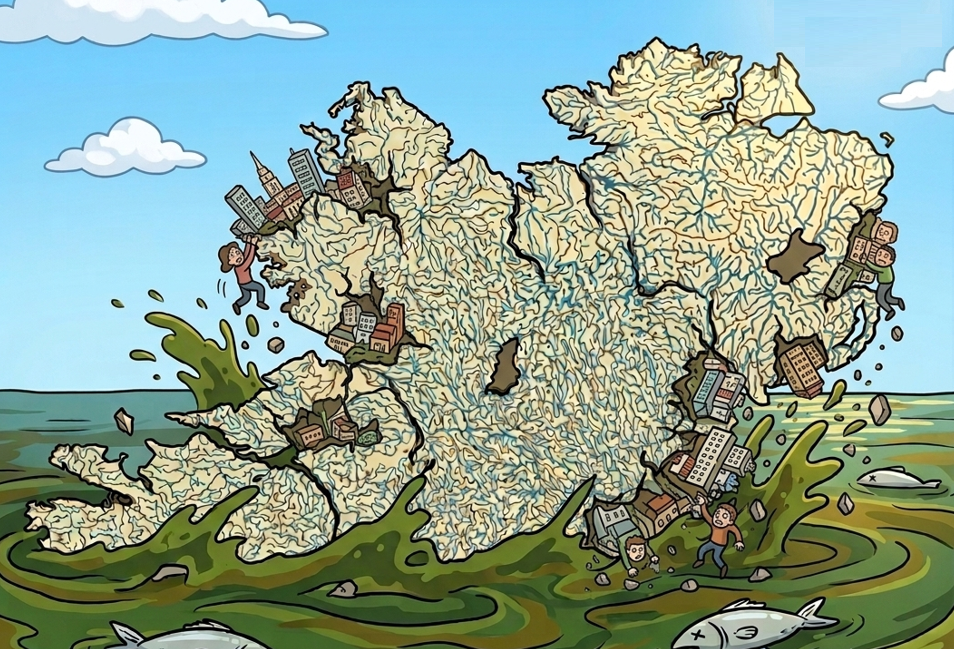
In Ireland, extensive dairy farming aimed at the export market has had the consequence of polluting our lakes, rivers wetlands and groundwater killing fish and destroying complex river systems. EU and Irish environmental legislation has facilitated this situation. As with so much else in Irish society, reforms will not work because a society based on the need for constant expansion of production is incompatible with rational agricultural practice. Under capitalist production, sustainable practices are an unwelcome impediment to competitive pricing. The economic system compels dairy farms to pollute our rivers. Fish kills will stop being frequent events when a rational system is developed in which the land is worked for food and other useful things and not for profit.